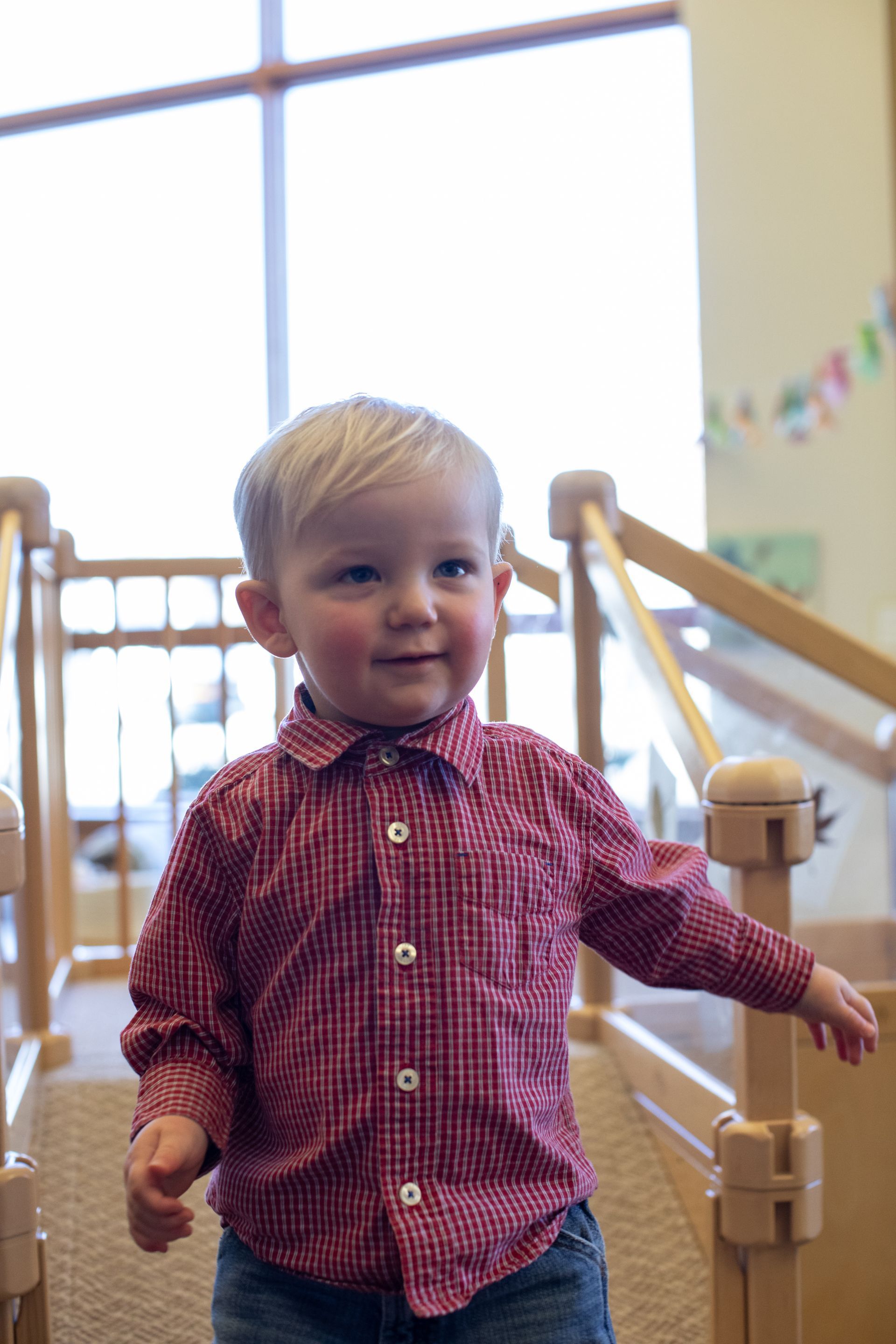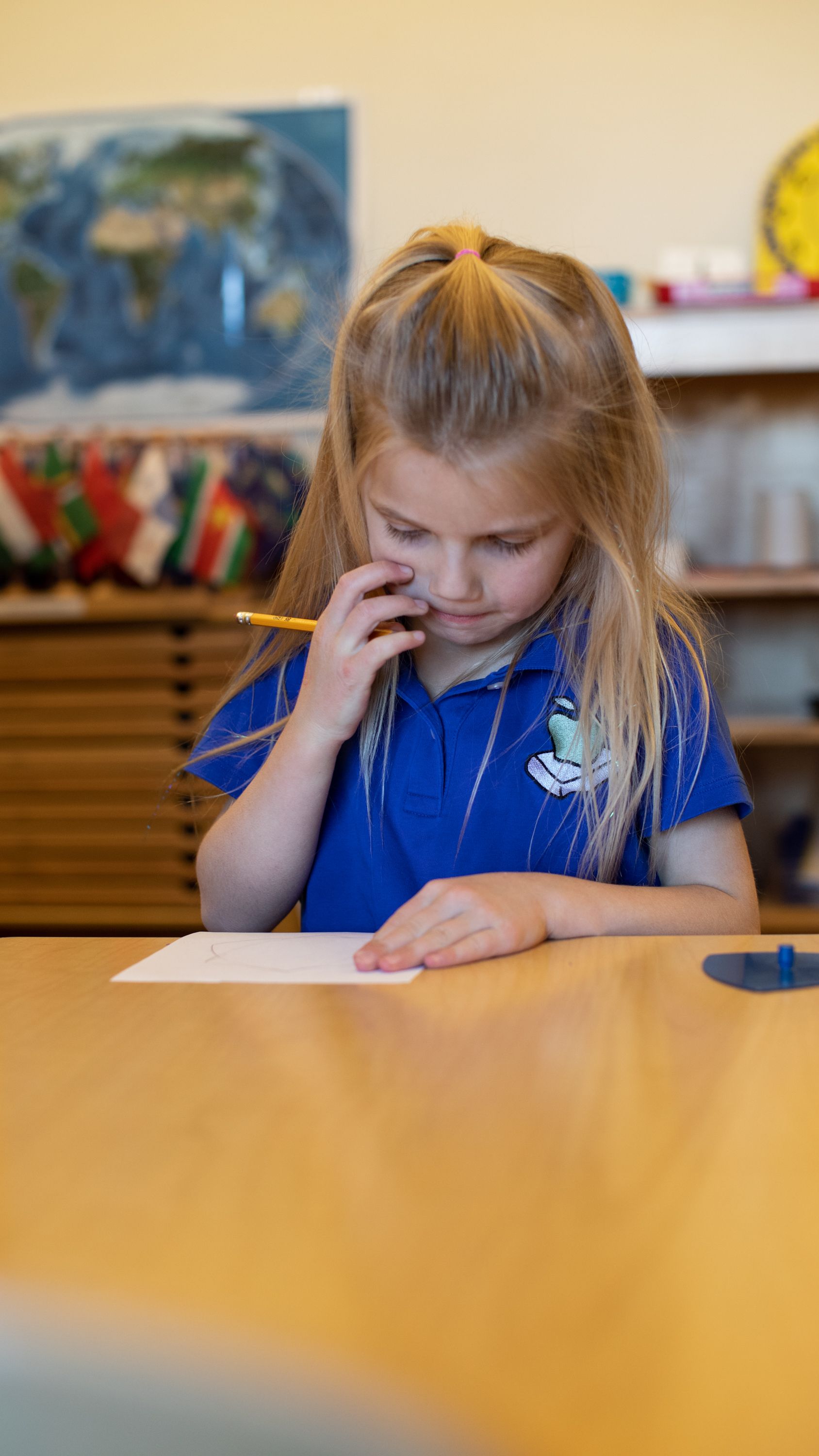
You know Montessori environments are different from traditional classrooms. Perhaps you have heard the common myths: that children run around doing whatever they please, with all play and no structure. Or maybe you have heard the exact opposite—that the environment is so rigid it stifles creativity and natural childhood behavior.
So, what is it really like inside an authentic Montessori environment?
We can practically guarantee that once you step inside for yourself, sit quietly in an observation chair, and watch the children and adults in motion, your perspective will be transformed. At Wonderland Montessori, we welcome parents to observe whenever possible. The children are well-accustomed to visitors, and seeing the peaceful focus of a functioning community in person is far more informative than reading about it on paper.
In the meantime, here is a glimpse into what you will experience inside an authentic Montessori environment across our Flower Mound, Las Colinas, McKinney, and Trophy Club campuses.
A Mindful Arrival
From the moment a child steps through our doors, expectations are set with care and respect, even for our youngest learners in our Nido and Toddler programs.
Children are empowered to hang up their own bags and coats on low, accessible hooks. They sit down to change into designated indoor shoes—a practice that helps keep our environments clean and signals a psychological transition from the bustle of the outside world to the calm, home-like sanctuary of school.
Our AMI and AMS-certified guides greet each student individually at the door. They kneel to the child's eye level, make eye contact, offer a warm handshake or greeting, and welcome them by name. Through this simple daily gesture, we intentionally model grace, courtesy, and polite human interaction. In turn, children absorb these social skills and naturally apply them in their daily lives outside of school.
The Uninterrupted Work Period
The morning work cycle is a hallmark of authentic Montessori education. We honor the child’s natural capacity for deep focus by protecting a multi-hour block of uninterrupted time each morning.
The length of this cycle depends on the child’s developmental stage:
- Nido & Toddler (8 weeks – 36 months): Shorter, fluid periods focused on movement, language, and practical life skills.
- Children’s House (Ages 3–6): Up to a full three-hour uninterrupted work period each morning.
- Elementary: Dynamic work periods in the morning and afternoon that support deeper research and collaborative project work.
During this time, children choose purposeful activities independently while guides present small-group or individual lessons. To a casual observer, it might look like play—and in a sense, it is. But as Dr. Maria Montessori observed, purposeful activity is the child's work.
Our hands-on materials are scientifically designed to appeal to the child's developmental needs. What may look like a simple wooden puzzle is actually a hands-on botany or zoology diagram. What appears to be a stack of pink wooden cubes or colorful beads are sophisticated concrete tools for mastering spatial relationships, arithmetic, and algebraic concepts.
Children also experience true freedom within limits. They have freedom of movement—they may choose whether to work at a table or on a floor rug, move around when their bodies need to stretch, and access the restroom or independent snack table without needing an adult’s permission. Respecting a child’s physical autonomy builds self-regulation and executive functioning.
Across our environments, you will observe children engaged in:
- Practical Life: Caring for themselves and their physical environment (sweeping, wiping leaves, buttoning, pouring).
- Sensorial: Refining the five senses to categorize and understand spatial dimensions, color, texture, and sound.
- Language: From phonetic sandpaper letters and movable alphabets to advanced grammar and creative writing.
- Mathematics: Moving from concrete decimal quantity beads to abstract mathematical equations.
- Cultural Studies: Geography, biology, history, art, and music woven naturally into daily exploration.
Social Development & Community Life
Montessori education focuses on whole-child development: social, emotional, physical, and cognitive. Rather than assigning seats or forcing artificial pairings, we allow children to decide whether they wish to work independently or cooperatively, and with whom.
Guides carefully coach children on how to choose complementary work partners for focused tasks, helping them distinguish between productive work partnerships and playful social friendships.
As children transition into the Elementary years, peer connection becomes central to their moral and social development. While social conflicts are a natural part of growing up, our environments provide the space and tools to navigate them constructively.
Our guides proactively teach mediation, graceful communication, and conflict resolution. Using role-play, grace and courtesy lessons, and reflective discussions, we help children resolve dilemmas with empathy, building strong social-emotional intelligence.
The Role of the Guide
Another distinct element of our school is the role of our adults. We refer to our lead educators as guides rather than traditional teachers, as it accurately describes their purpose. Instead of standing at the front of a room lecturing a passive group, a guide prepares the environment, observes each child’s developmental readiness, and opens doors to discovery.
- Individualized Lessons: In the Children's House, lessons are given one-on-one, tailored precisely to the child's interest and mastery. In Elementary, lessons are given to small groups to satisfy their growing desire for social collaboration.
- Knowing When to Step Back: One of the most delicate arts of Montessori teaching is knowing when to step in with help and when to step back and let a child problem-solve independently. We default to allowing the child to try, which builds true resilience, independence, and self-efficacy.
- Observation: Guides spend continuous time observing the room. They take detailed record-keeping notes on skills mastered, social dynamics, and areas where a child may need additional support or a new lesson.
At Wonderland Montessori, our guides do not position themselves as the center of attention. They are dynamic facilitators who support each child's self-construction.
Experience the Wonder for Yourself
The best way to understand the harmony, independence, and deep concentration of a true Montessori community is to witness it in person.
Whether you are exploring enrollment for your infant, toddler, or primary-aged child, we invite you to sit quietly in one of our environments and watch the beauty of self-directed learning unfold.
Ready to see authentic Montessori in action?
We welcome prospective families to
schedule an observation at any of our four Texas campuses: Flower Mound, Las Colinas, McKinney, or Trophy Club.