Our world can often feel overwhelming and fast-paced. As parents and educators, we frequently ask ourselves how we can help our children feel secure, grounded, and cared for, while also preparing them to lead with compassion as adults. How do we cultivate empathy, kindness, gratitude, and a genuine sense of community?
Dr. Maria Montessori recognized that true peace is not merely the absence of conflict, but a active practice rooted in self-awareness, respect, and global understanding. For over a century, Montessori education has been structured to address these exact questions. The mission in our environments is clear: we want children to hold a expansive view of the world, appreciate diversity, and acquire the practical tools needed to navigate life peacefully.
Modeling Peace Every Day
Peace is taught both directly and indirectly. While we talk openly about what it means to be a peacekeeper, the most profound lessons come from modeling.
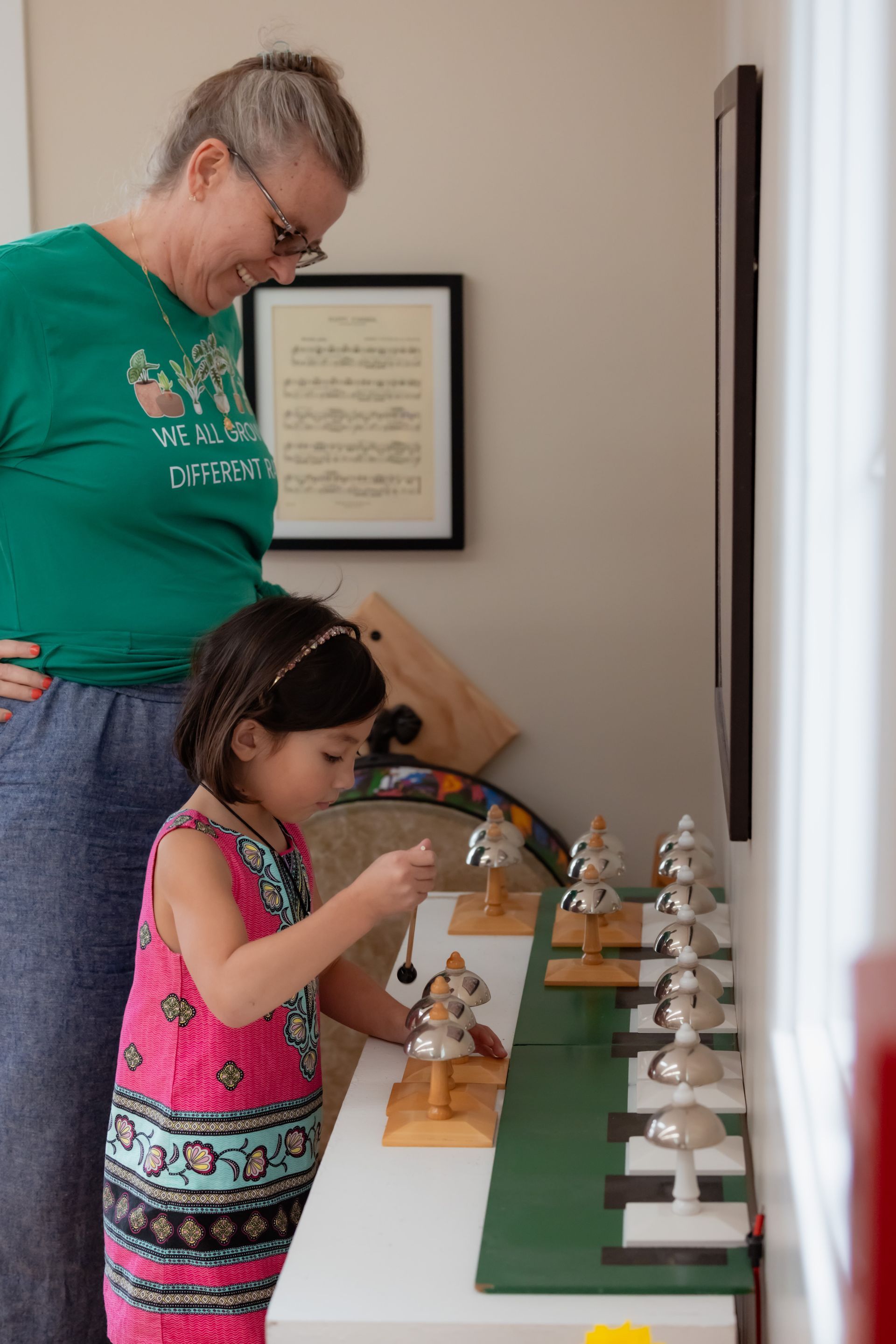
In our Nido, Toddler, and Children’s House environments, our AMI and AMS certified guides model calm communication, thoughtful movement, and respectful listening. Children absorb the tone of voice, graceful interactions, and emotional regulation modeled by the adults around them. Every interaction becomes a quiet opportunity for learning.
Teaching a Global Perspective
Even from a very young age, children in our Children's House environments are introduced to geography through a global lens. Rather than focusing on political boundaries, three- and four-year-old children explore physical landforms, oceans, and biomes using tactile puzzle maps.
This approach helps children view our planet as a shared home, developing a deep appreciation for the natural world and humanity as a whole before learning about borders. As children grow into elementary programs, they explore timelines of human history, ancient cultures, and the fundamental needs of humans, discovering how people across time and geography satisfy their physical, social, and creative needs in diverse ways.
Giving Children Real Tools for Conflict Resolution
Conflict is a natural part of social development. Rather than stepping in to impose immediate consequences, Montessori guides equip children with concrete social tools to resolve differences independently.
Children learn precise phrasing to express their feelings, listen to others, and seek mutually respectful solutions. Our environments also offer practical self-calming strategies, including focused breathing, quiet spaces, and mindful movement. These tools help children regulate their emotions before engaging in conversation.
Respecting the Flow of the Day
Because Montessori environments utilize uninterrupted work cycles rather than rigid time blocks for each subject, guides have the flexibility to address social and emotional needs in the moment.
If a group of children experiences difficulty working through a shared project, the guide has the time to sit with them and facilitate a authentic conversation. Without feeling rushed by a traditional schedule bell, children learn how to repair relationships, restore harmony, and understand different perspectives.
Connecting to the Broader Community
As children develop a strong foundation of self-regulation and social awareness, their desire to contribute naturally extends outside the classroom walls.
Whether assembling care packages, gathering supplies for local animal shelters, or engaging in environmental stewardship, children learn that their actions have value. Supporting their initiatives shows them that they are capable, responsible members of society right now.
By giving children the space to practice peace, empathy, and active contribution daily, we nurture values that will serve them, their families, and their communities for a lifetime.