A familiar scenario: your child comes home from school, and you, the interested parent, eagerly ask how their day went and what they did. While some children will happily relay the day’s events, many shrug and say, "Good," without offering details.
Don't worry—this is completely normal. After a full morning or afternoon of concentration, practical life work, and social navigation, children are often experiencing natural fatigue at pickup time. Giving them time to decompress and revisiting the conversation at the dinner table can make a big difference.
However, did you know you can learn a lot about your child’s school experience without them saying a word?
Is your child’s environment one that nurtures deep engagement, or does it lead to boredom and frustration? School should be a place that sparks wonder, curiosity, and intrinsic motivation—it should never feel like something to be passively endured. Here are key indicators that help reveal how your child’s learning experience truly feels to them.
What an Engaged Montessori Child Looks Like
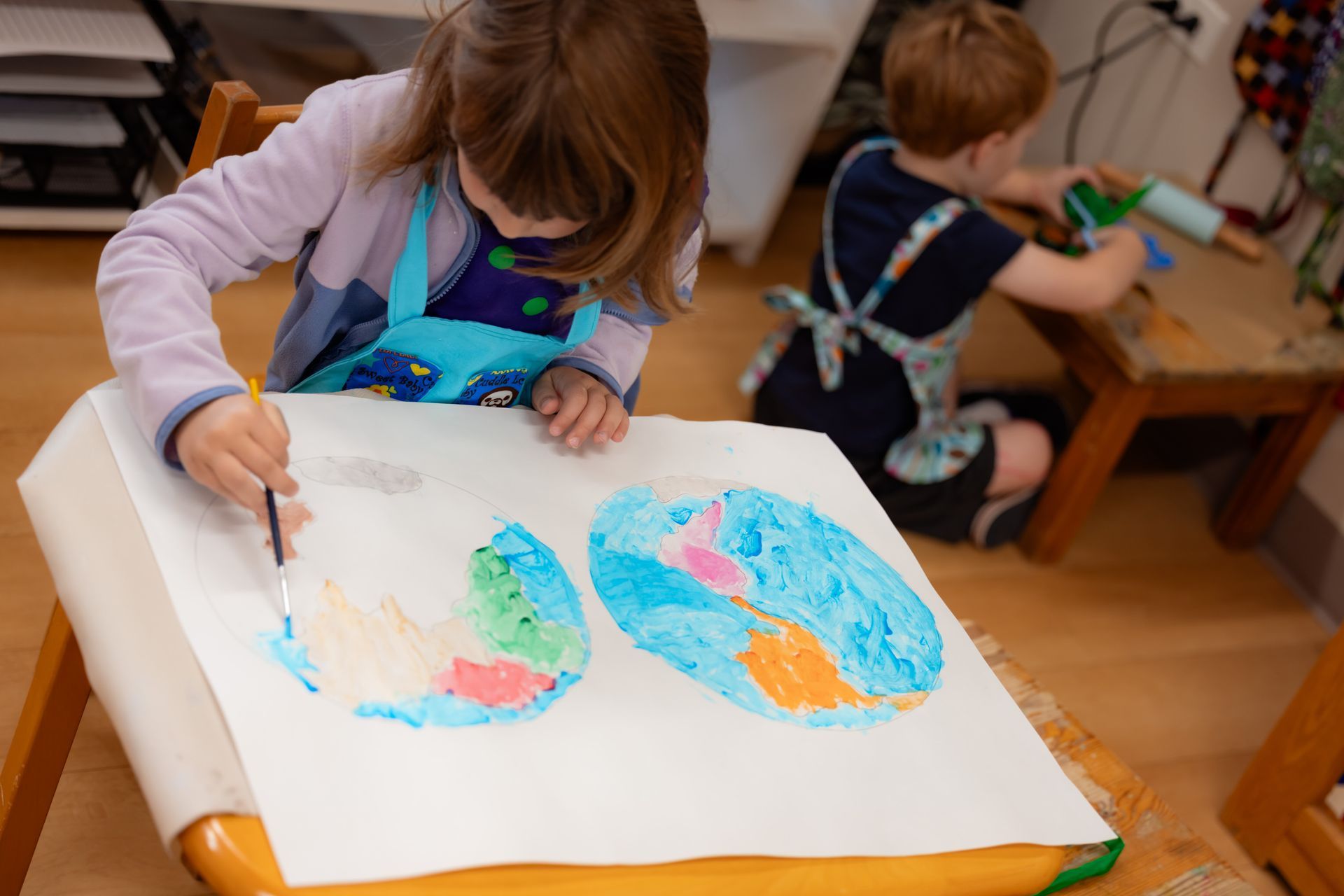
When a child is in an environment that honors their individual developmental timeline, engagement shows up naturally in their everyday behavior:
- They Make Real-World Connections: As you prepare lunch on a Saturday, your toddler or primary child might proudly demonstrate the exact slicing, spreading, or pouring techniques they practice in their Practical Life area. Or they might surprise you with detailed knowledge about plant structures during a walk in the park. Making these connections is a clear sign of deep, conceptual understanding.
- They Share Spontaneous Discoveries: "Did you know that if our intestines weren’t all squiggled up, they would be as long as a baby blue whale?!" These joyful outbursts let us know that children are thinking about what they have explored long after the lesson ended.
- They Dislike Missing School: While no child enjoys being sick, children who feel connected to their community genuinely miss being there. They care about their daily work and look forward to seeing their peers and guides.
- They Arrive with Purpose: At morning drop-off across our Flower Mound, Las Colinas, McKinney, and Trophy Club campuses, engaged children often walk in with eager confidence. They might be focused on heading straight to a material they have been thinking about since yesterday.
- They Build Meaningful Social Connections: Montessori environments emphasize grace, courtesy, and whole-child development. When children are supported in learning how to collaborate and resolve social conflicts peacefully, they feel safe and happy within their community.
- They Display Independence and Self-Efficacy: A prepared environment empowers children to make choices, take healthy developmental risks, and care for themselves and their surroundings. If your child takes initiative at home, they are reflecting the independence nurtured at school.
Signs Your Child May Be Disengaged or Bored
When learning environments rely on one-size-fits-all instruction, passive listening, or rigid expectation, children often show subtle signs of disconnect:
- Persistent Reluctance to Attend: Everyone has an off day, but if morning drop-off is a continuous struggle marked by dread, it is worth paying close attention.
- Behavioral Changes or Outbursts: Children often express frustration or boredom through behavior. When a child's natural drive for movement and meaningful challenge is constrained, they may act out.
- Complaints That Work Is "Too Easy" or "Too Hard": In traditional settings, children often must move at the pace of the whole group rather than their own pace. Expressing that work is too simple or overwhelming indicates a need for individualized challenge or support.
- A Fading Sense of Curiosity: Children are naturally inquisitive. When their innate desire to explore is replaced by repetitive drills or artificial rewards, that natural spark can begin to dim.
- Direct Expressing of Boredom: It can be easy to brush off comments about being bored as a standard part of school life. However, if a child explicitly expresses that they feel unengaged, their perspective deserves to be heard and explored.
What You Can Do as a Parent
If you notice a pattern of avoidance, apathy, or behavioral frustration, there are proactive steps you can take:
- Schedule a Collaborative Meeting with Your Guide: Reach out to your child's guide with observations rather than assumptions. Ask how your child engages during the uninterrupted work period and how they interact with the materials and their peers.
- Examine the Educational Philosophy: Ask how the school handles individual learning rhythms. Is instruction tailored to the child, or driven by whole-group benchmarks? Are lessons hands-on and self-directed, or passive? Is independent thinking genuinely valued?
- Assess Opportunities for Movement and Autonomy: Children need freedom of movement to thrive. In an authentic Montessori environment, movement is integrated directly into learning—children are not required to sit at a desk for hours, nor is movement restricted only to outdoor recess.
- Include Your Child in the Conversation: In an age-appropriate way, ask your child how they feel about their daily routine. Listen to what brings them joy and what feels challenging or uninteresting to them.
The Wonderland Montessori Difference
At Wonderland Montessori, our AMI and AMS-certified guides prepare environments specifically designed to meet the physical, cognitive, and social-emotional needs of each child—from our Nido and Toddler programs through Children's House. By offering freedom within limits, individualized lessons, and uninterrupted blocks of time, we protect the natural curiosity that every child carries.
Curious to see what joyful, deeply engaged learning looks like in action?
We invite you to sit quietly in one of our environments and observe the rhythm of a morning work period at any of our four Texas campuses: Flower Mound, Las Colinas, McKinney, or Trophy Club.
Schedule a tour today!