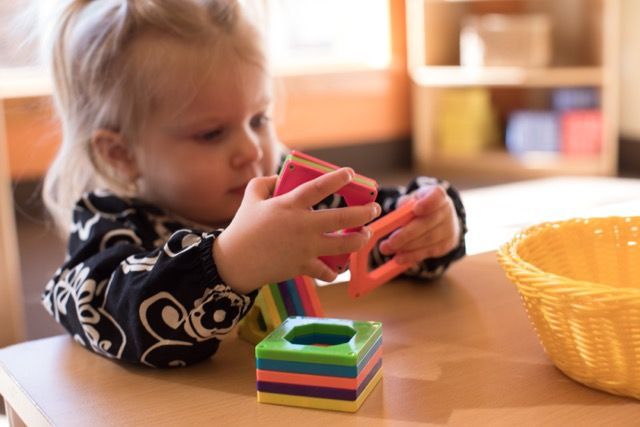
For children in the first three years of life, movement is far more than physical exercise—it is how they build their bodies, organize their minds, and understand themselves in relationship to the world around them.
In an authentic Montessori environment, a movement space offers continuous freedom, safe boundaries, and the calm presence of a prepared adult. Whether in a classroom or at home, how we prepare a movement area communicates a powerful message to our children: Your body is capable. You are trusted. You belong here.
At Wonderland Montessori, this principle guides how we design our Nido (8 weeks to 18 months) and Toddler (18 to 36 months) environments across our four Texas campuses in Flower Mound, Las Colinas, McKinney, and Trophy Club. Here is how movement supports young learners and how you can apply these principles at home.
Supporting Our Youngest Movers (Nido)
From about two months through the early walking stages, infants are driven by an inner developmental impulse to move. A well-prepared space offers uninterrupted floor time on soft, firm surfaces, free from containers like bouncers, walkers, or jumpers that restrict natural motor development.
Equally important is the adult within this space. Infants observe how adults move, absorbing the calm, intentional rhythm of their environment.
Key ways to support movement in infancy:
- Intentional Pace: Slow, calm movements by the adult give infants a clear model and signal safety to their developing nervous system.
- Narration: Simple, descriptive language helps infants connect movement with meaning: “I am placing you on the mat,” or “You are turning onto your side.”
- Calm Reassurance: Crying is a natural part of exploration. Responding with a calm, steady presence allows infants to rest, feel secure, and try again.
- Uninterrupted Milestones: Rolling, crawling, and pulling up emerge naturally when we observe without rushing or interfering, trusting the child’s individual developmental timeline.
Freedom Within Limits for Toddlers
As children grow into the Toddler stage, their movements become more complex—and so do their emotional worlds. A movement area for children aged 18 to 36 months must balance the freedom to explore with clear, consistent limits.
Toddlers are discovering what their bodies can do while learning community norms. Limits are not restrictions; they are the boundaries that make true independence possible. When toddlers know what to expect, they move with confidence and purpose.
- Clear Expectations: Establish simple, positive rules such as “We walk indoors,” “We carry our materials carefully,” or “The climbing structure is for climbing.”
- Support Through Transitions: Toddlers often fluctuate between independence and needing comfort. A supportive adult remains available without being intrusive.
- Grounding Through Big Emotions: Power struggles often surface around physical movement. Rather than trying to control a child's body, maintain a grounded presence, prioritize safety, and offer clear choices.
How to Create a Movement Area at Home
You do not need a large home or specialized equipment to support your child's physical development. What matters most is intention, simplicity, and trust in your child’s capabilities.
1. Choose a Safe, Uncluttered Space
Select a consistent area—such as a corner of the living room or bedroom—where your child can move freely each day. Clear away unnecessary clutter so your child can focus on their body without distraction. For infants, prioritize firm floor mats. For toddlers, ensure enough open floor space for walking, carrying, and balancing.
2. Offer Purposeful Opportunities
Select a few simple items that invite activity without forcing it:
- For Infants: A soft, firm mat; a low mirror securely mounted to the wall; and simple wooden rings or grasping toys within reach.
- For Toddlers: A low climbing arch, a small push cart or heavy object to carry, and space to squat and balance.
3. Model Calm, Intentional Movement
Children absorb how we move through space. Slow down, sit or kneel at their eye level, and move with intention. Use simple language to describe what is happening around them.
4. Set Consistent Boundaries
Decide ahead of time what is allowed in the movement space and hold those limits with warm firmness. When limits are consistent, children spend less energy testing boundaries and more energy mastering movement.
5. Follow the Child’s Natural Rhythm
Some days your child will require extended physical activity; other days, they may seek quieter, focused work. Trust these rhythms. If a toddler resists a transition, pausing to allow a few extra minutes of movement often provides the physical input their body needs.
The Prepared Adult
In Montessori philosophy, the adult is an essential component of the environment. A beautifully arranged room loses its efficacy if the adult is rushed or distracted. By approaching movement spaces with patience, clarity, and respect, we help children develop bodily control, self-reliance, and a genuine joy in their own capabilities.
Interested in seeing how our AMI and AMS-certified guides prepare movement spaces for infants and toddlers? We invite you to
schedule a tour at one of our Wonderland Montessori campuses in
Flower Mound, Las Colinas, McKinney, or Trophy Club to see our prepared environments in action.